
Cooking with Love, Choosing Refine Pet Foods for Accuracy
25 November 2025
Useful and Responsible Gifts: A Guide for Conscious Pet Lovers
2 December 2025
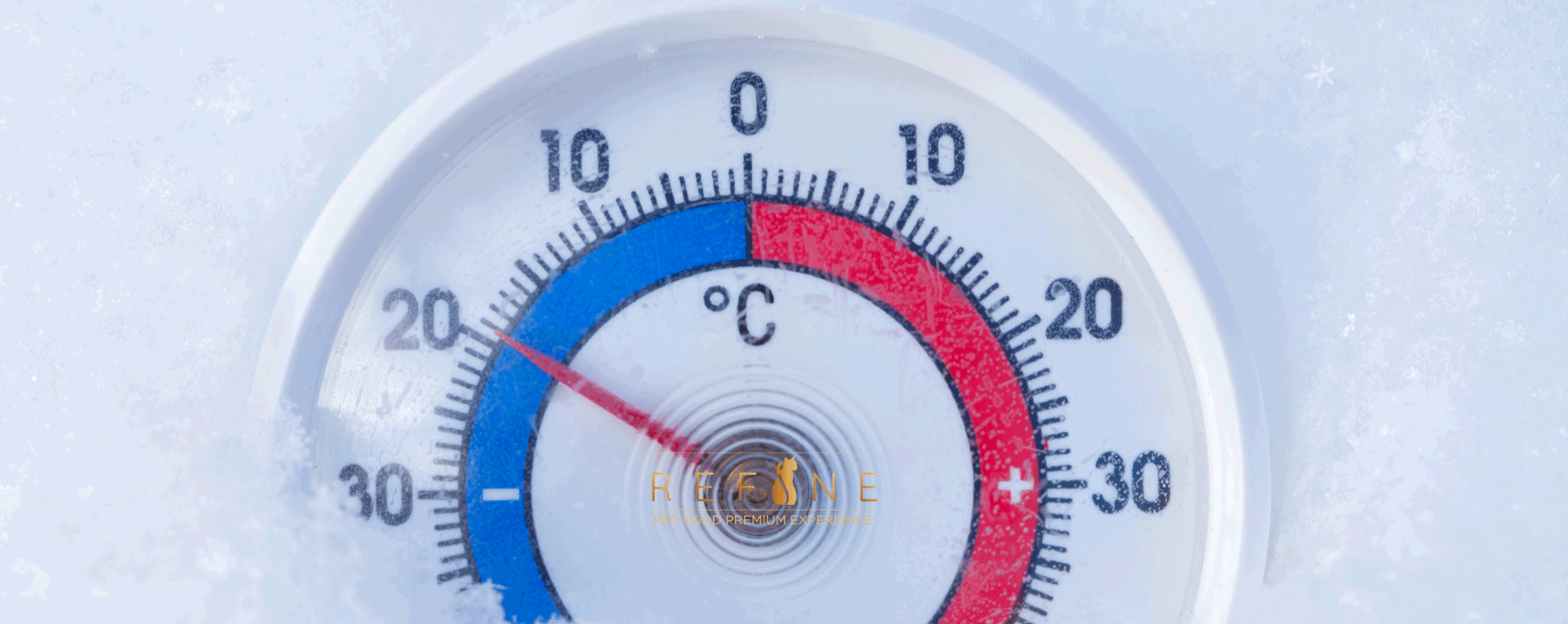
With the arrival of colder weather, dogs and cats naturally adjust their behaviour, habits and even their nutritional needs. Shorter days reduce activity levels, lower temperatures may influence metabolism, and pets tend to spend more time indoors — often in dry environments due to home heating.
Understanding these seasonal changes helps adapt their routine and support their wellbeing in a simple, mindful way.
Metabolism & Temperature: How Pets’ Bodies Respond to the Cold
An animal’s body constantly works to maintain a stable internal temperature. In winter, this may require slightly more energy, especially for dogs that spend time outdoors or breeds with little undercoat.
However, for pets who live mostly indoors — where the temperature remains stable — caloric needs may stay the same or even decrease, as physical activity tends to drop.
What to look for:
- changes in appetite
- increased search for warmth or longer rest times
- noticeable weight fluctuations
The goal is to maintain a balanced diet while monitoring weight and adjusting portions gradually if needed.
Hydration: A Commonly Overlooked Need in Winter
During the colder months, many pets drink less water — partly because of the lower temperatures and partly because they spend more time resting. Indoor heating, however, can make the air dry and increase the need for proper hydration.
Useful tips:
- always provide fresh, easily accessible water
- place multiple bowls in different areas of the home
- choose wide, shallow bowls (ideal for “whisker-friendly” drinking for cats)
- watch for signs of mild dehydration, such as drier gums or a dull coat
Proper hydration supports overall wellbeing, digestion and kidney function.
Routine & Activity: More Indoor Time Requires Different Stimulation
In winter, physical activity naturally decreases: shorter walks, less outdoor play and more hours of sleep. These changes can affect metabolism, mood and behaviour.
How to adapt your pet’s routine easily:
- introduce mental activities (sniffing games, puzzles, small indoor obstacle paths)
- plan short but frequent play sessions
- maintain consistent feeding and resting schedules
- create warm, comfortable areas away from drafts
Environmental enrichment helps reduce boredom and stress, supporting emotional balance.
Thermal Comfort: The Role of the Home Environment
A warm home can be very cosy for pets in winter, but it may also present challenges: dry air, concentrated heating sources and cold floors.
Smart adjustments:
- use raised beds, mats or soft cushions
- maintain healthy indoor humidity levels
- avoid letting pets rest too close to radiators or direct heat sources
- provide a “safe retreat” where they can relax undisturbed
A well-balanced environment promotes skin and coat health and supports natural thermoregulation.
Conclusion: Small Adjustments for Big Winter Wellbeing
Winter encourages calm, warmth and daily care. With a few simple adjustments — consistent routines, steady hydration, comfortable indoor spaces and tailored mental activities — you can support your pet’s wellbeing without dramatically changing their diet.
The result? A more serene, balanced and enjoyable winter season for everyone, including our four-legged companions.
Contact us